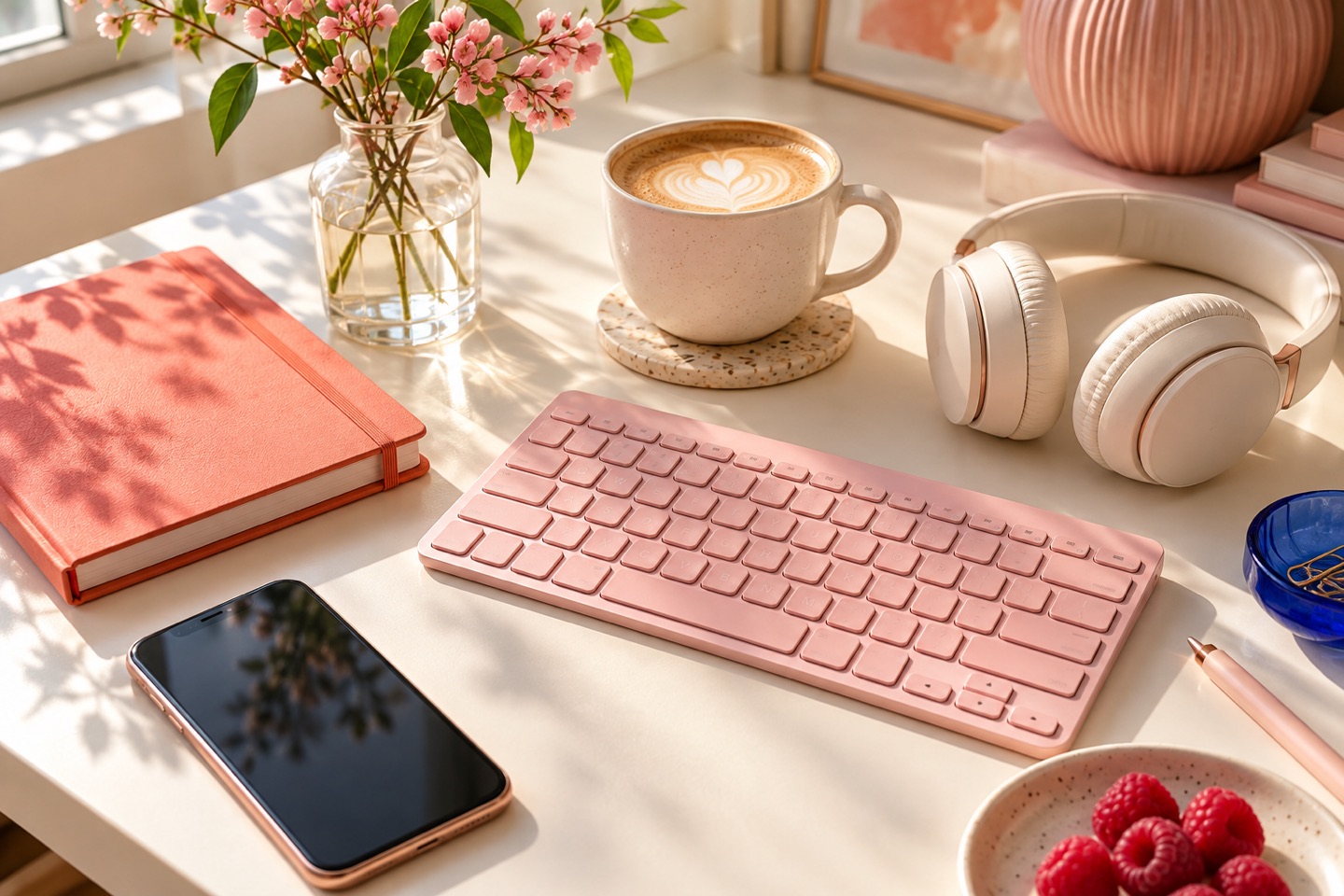
A good desk does not need to look like a shopping list. I would start with what already works, make room for the task in front of me, and add colour only where it feels natural.
Begin with a ten-minute reset
Take everything off the main working surface. Put back the screen, the input devices and the one thing you reach for most often. Move duplicates into a drawer. The useful question is not “does this look aesthetic?” but “does this need to be here today?”
Keep a little clear space for paper or a coffee. A desk that looks finished but leaves no room for ordinary life is difficult to keep comfortable.
Choose a small palette
A cream base with one warm accent is an easy starting point. Pink, peach, cherry red or a bright blue can come from something you already own: a notebook, a mug or a postcard. You do not need a matching keyboard, mouse and speaker to make the colours work.
I would keep the bigger items visually quiet and let one or two smaller pieces carry the colour. This gives you room to change the mood later without replacing useful hardware.
Give cables a home
Route the cable you use every day toward one accessible edge. Store occasional cables together and label unfamiliar ones. A pouch can help, but a spare drawer or reusable bag works too. Organisation should reduce the number of decisions you make.
If one piece actually needs replacing
The Pebble Keys 2 research note is worth reading if a compact keyboard suits your routine. If video calls are the difficult part, the Key Light Neo note explains the checks I would make. Neither is essential to a colourful desk.
My favourite stopping point
Stop when the space feels easier to use. You can enjoy a pretty setup and still decide that the mouse you already own is perfectly fine. The nicest upgrade may be the room you get back.